
Could tiered petrol subsidy model work for us?
By Zan Azlee
Economic issues have been discussed by society for many years now. The recent increase in oil prices is just one of the many things that have caused it all to go to the pits (although the effects of this one have been quite drastic).
It’s a battle that the current government has been fighting ever since it got into power. In fact, if you think about it, it is something that the previous government and the one before that had to deal with, too.
Every government comes into power promising to improve the economy, and rightfully so. However, it’s not something that they always do correctly, even though I do think they try.
Some governments give handouts, some increase subsidies, and some try to control the prices of different goods and services. We see the validity of all these choices, but are these choices suitable for the situations?
Is it fair for everyone?
What is happening now is that there is a cap on the government subsidies for all those who need to use petrol. So it is actually the same across the board for everyone, no matter their income level.
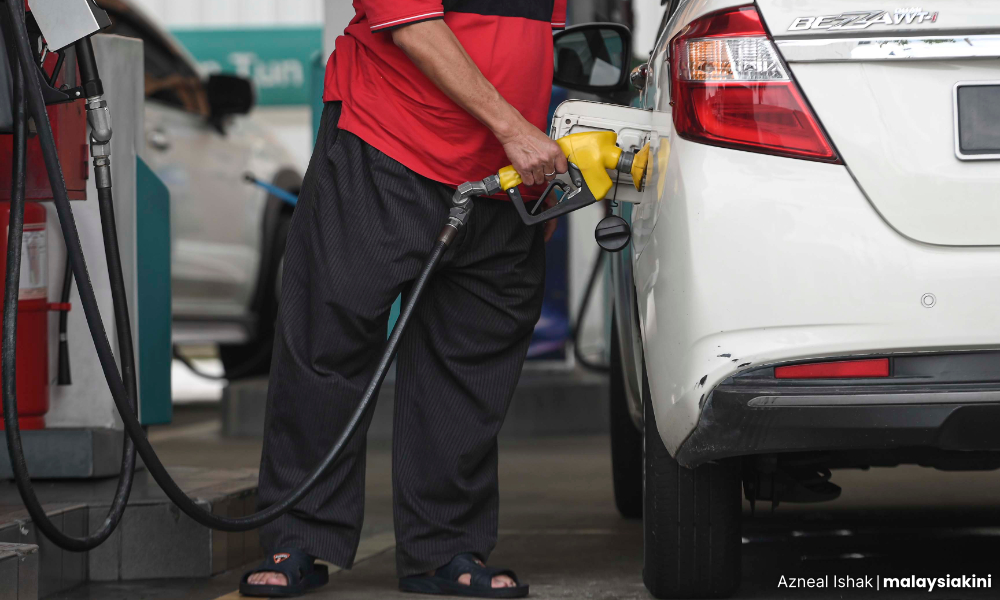
Once everyone fills petrol to the monthly limit, whatever excess usage after that has to be paid without the subsidy and at market price. Although this is easier to implement, I don’t think that it’s fair.
It isn’t fair because people who actually need to use petrol more for their work, such as those with long commutes or in transportation and logistics, will have to suffer higher prices due to the capped subsidy.
Someone in a lower-income bracket who relies on driving for work has to pay the same prices as someone in a high-income bracket who uses a vehicle with higher fuel consumption.
It also disregards people who fall between the very low-income and the very high-income brackets. These people (commonly referred to as the M40) have to pay higher prices but have yet to qualify for reliefs.
The more you use, the more you pay
Maybe a better solution would be a form of tiered usage, like how we pay for electricity. The less you use, the higher the subsidy or discount you receive; the more you use, the less subsidy or discount you receive.
When it comes to petrol, this tiered subsidy means that everyone gets to enjoy some form of relief a little more justly, with those who need to use it benefiting and not in the same way as a casual user. This is also while the government can still save.
So instead of a hard cap, there is a transition and a spectrum of subsidies for the different usage levels. The more petrol you use, the less subsidies you get, and the less you use, the more subsidies you get.
I understand that it is easier said than done, but administering and governing a country is not meant to be simple. The government needs to find a balance that will help its coffers and be sympathetic to the people.
In my household, we are lucky to have an electric vehicle as an alternative to our other diesel vehicle. We try to minimise the usage of the diesel vehicle and use the EV as much as possible. We adjust our travel habits to fit.
This actually worked quite well when the oil crisis first started. But after several months now, the realities of work and family management mean that it is fast becoming quite difficult, and the diesel vehicle is used more and more.
Since the oil crisis doesn’t look like it’s going away soon, we have to start thinking of a more sustainable way to handle this without burdening both sides – the government and the people – too much.
I don’t want to come off as too critical of the situation because I do understand, as do many people, that it is a complicated and challenging situation. But I do believe that something better can be done.
It’s a tough job, but the government has got to do it.
[This article was originally written for and published at Malaysiakini.com]
Get Zan Azlee’s best-selling book ‘Liberal, Malay and Malaysian‘ today!


